
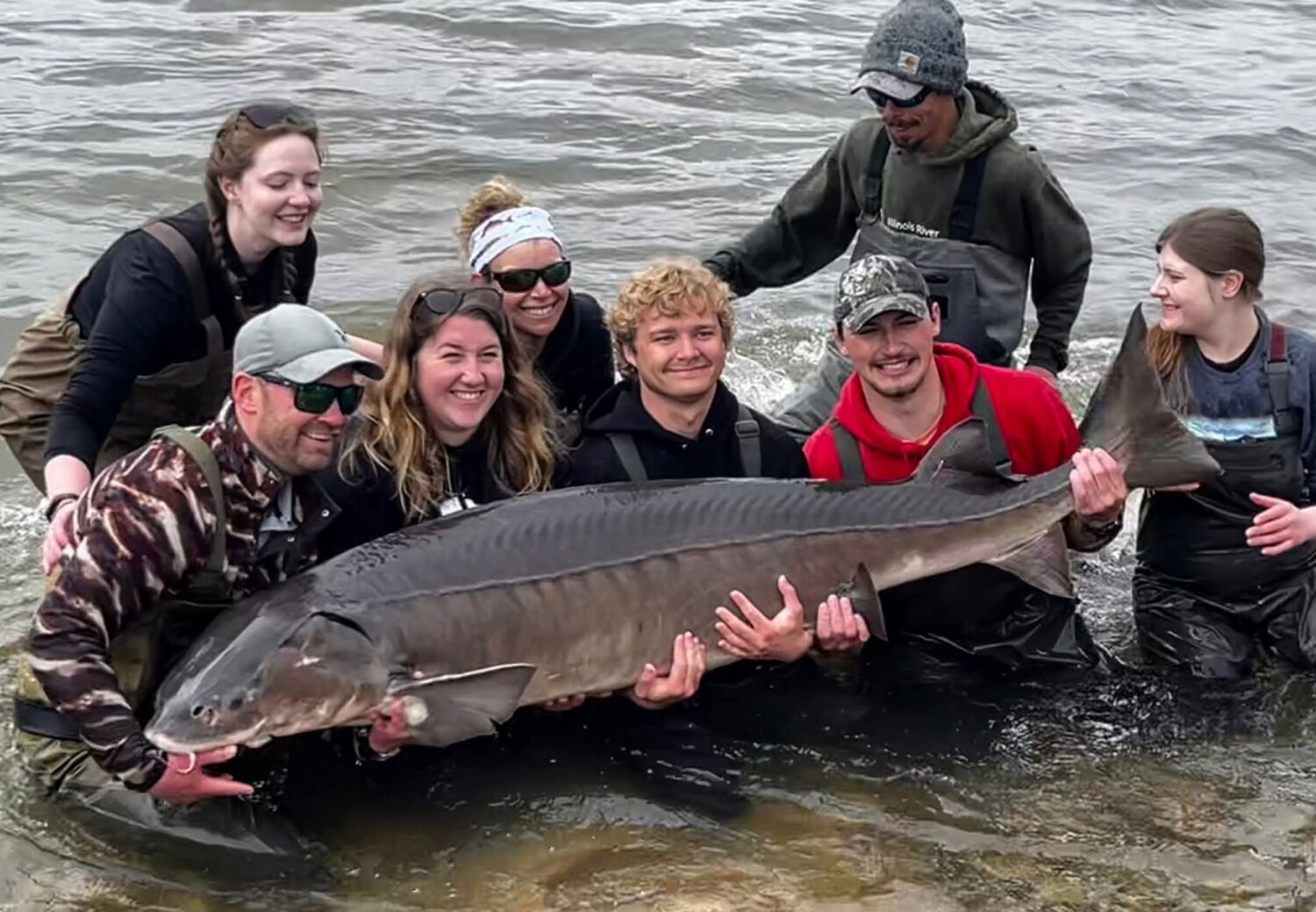
Sturgeon are spawning on many rivers. For daily updates on the best viewing possibilities, visit https://dnr.wisconsin.gov/topic/Fishing/sturgeon/SturgeonSpawning.
Meanwhile, walleyes are on a post-spawn feeding binge in the lower bay, and some impressive northern pike have been hooked as well. A few trophy muskies have also been caught and released. Perch remains closed for several weeks yet.
Smallmouth bass season gets underway in many areas Saturday, along with most game fish species inland.
Muskie season opens Saturday on inland waters across the state, but remains closed on Green Bay until late May. Check the 2026-2027 fishing regulations booklets for all the rules, or look online at https://dnr.wisconsin.gov/topic/fishing/regulations.
Wisconsin’s Fat Bird Week — an annual effort to raise awareness on native bird species and how we can help them — returns May 8-15. It’s a fun, bracket-style competition hosted by the Natural Resources Foundation of Wisconsin and highlights how chunky birds are healthy birds.
Eight chubby contestants compete in a single elimination, bracket-style tournament online. The first round of voting will open at 9 a.m. Friday, May 8, and voting will remain open for 48 hours. The second round of voting opens at 9 a.m. Sunday, May 10 and will remain open for 24 hours. Rounds continue to open a 9 a.m. daily until the final round on Friday, May 15.
This year’s contestants include Chungus Cardinal, Massive Meadowlark, Wood Duck with a Dad Bod, Whoopin’ Wigeon, Ginormous Goldfinch, Bluebird Couple Who Let Themselves Go, Jiggly Junco and Tubby Tree Swallow.
Fat, healthy birds benefit our environment in a variety of ways. As key pollinators, birds disperse seeds, pollinate plants, and help manage pests in farmlands and forests. Birds also have significant mental health benefits for humans and support Wisconsin’s $2.6 billion wildlife watching economy.
You can help by planting native species, reducing window strikes, buying bird-friendly coffee, and participating in the 15th annual Great Wisconsin Birdathon, Wisconsin’s largest fundraiser for bird conservation. Learn more at https://www.wisconservation.org/great-wisconsin-birdathon/.
For more on Fat Bird Week, visit https://www.wisconservation.org/fat-bird-week/. For other ways you can help birds, check out https://www.sossaveoursongbirds.org/.
More than 1,800 volunteers are expected to take part in the annual Fox-Wolf Watershed Cleanup Saturday from 9–11 a.m. at over 80 locations across the region.
This large-scale spring cleaning will focus on parks, shorelines, and waterways throughout the Fox-Wolf River Basin, including the Fox River, Wolf River, Lake Winnebago, and the Bay of Green Bay. Volunteers are expected to remove more than 7,000 pounds of trash and debris, helping ensure these popular outdoor spaces are clean, safe, and welcoming for the busy summer season.
“Our volunteers are the reason this event continues to grow each year,” said Executive Director Jessica Shultz. “Their efforts help keep our waterways clean and strengthen our communities.”
Following the cleanup, volunteers and families are invited to a free celebration picnic from noon–2:00 p.m. at Telulah Park in Appleton, featuring lunch, music, games, and family-friendly activities.
Area anglers have been enjoying some of the best spring rainbow trout stream fishing and Lake Michigan brown trout trolling in years.
More than 5,000 rainbows — commonly known as Great Lakes steelhead — were handled at the Buzz Besadny Anadromous Fisheries Facility on the Kewaunee River this spring. An estimated two million-plus eggs were taken from about 500 females, an average of about 4,000 eggs per fish.
Meanwhile, when they’ve been able to get out, brown trout anglers have been catching everything from small pan-friers to extra-large smokers.
The top 25 fish in the recent Baileys Harbor Brown Trout Tournament ranged from 13.25 to a 37-inch, 21.61-pounder. While most were weighed at Baileys, Algoma weighed four money-winners, including the third biggest, an 18.26-pound lunker.
Lake Michigan water levels have increased one foot in the past month, and are now two inches higher than the 100-year average. As of Friday, lake levels were estimated at 33 inches below the record monthly high, set in 2020, and 33 inches above than the record April low, set in 1964.


Comments
No comments on this item Please log in to comment by clicking here